
Rev. Jon D. Rodriguez, Pastor & Head of Staff
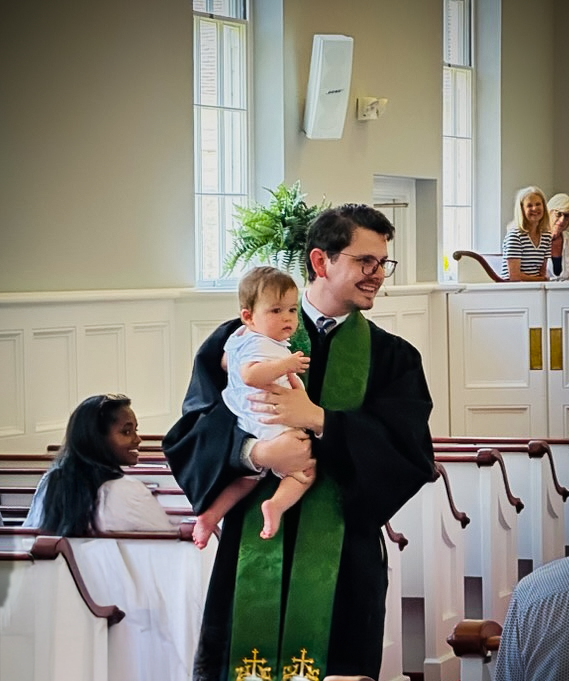
The Rev. Jon D. Rodriguez began as the 22nd Pastor of the First Presbyterian Church of East Hampton in January 2024. Jon is excited to embark on a new chapter of growth, devotion, and faithfulness with the people of East Hampton. Drawing on the church’s history of beautiful worship and engaging community outreach, he looks forward to finding new ways to serve God and one another. Jon also serves as a Covenant Pastor for our sister congregation - the Springs Community Church.
Most recently Jon served as the Pastoral Resident for Communications & Evangelism at Madison Avenue Presbyterian Church where he oversaw the youth and young adult ministries. Jon serves on the Board of Village Campus Ministry - an ecumenical student ministry on the college campuses of New York City - as its secretary. Jon received a bachelor’s degree in Public Relations & Mass Communication from Texas State University (go Bobcats) and a Masters of Divinity from Princeton Theological Seminary. He is currently working on a Doctorate in Reformed Theology and Worship through Pittsburgh Theological Seminary and the University of Edinburgh in Scotland. In his free time, Jon loves gardening and cooking for his wife, Alyson, son, Jon Jr., and daughter, Lydia.
Recent Sermons
Where two or more are gathered, the church comes into being. Scripture teaches us that God reveals himself through relationship - and, because we are made in God's image, we also take our true form through relationship. So how can we learn to live in loving relationship the same way Jesus did? We begin by shifting from individualism into the community where faith unites us.
World Communion Sunday reminds us that the church’s unity in Christ overcomes division of all kinds. Together, we sit at the same table and eat the same bread and drink the same cup. But this unity is only possible if we really believe that Jesus is The Bread of Life. So, what does it mean to believe in something by embodying it? And how can we accomplish this together as a church?
Does God care about human suffering? And what difference does a personal relationship with God make in the midst of tragedy? The Christian theology of sin and evil distinguishes between sentimentalism and true relationship, assuring us that God is with us in our suffering, sin does not have the final word, and God works to redeem the evil we experience because he has put an ultimate end to sin.
What is the purpose of life? And where does it come from? Scripture does not instruct us on which jobs to have, where to live, or who to spend time with. Instead, God’s purpose for us is revealed through simple acts. We were created on purpose, for a purpose. And as we pursue that purpose, we experience more than a purposeful life - we come to know the new life God gives us in Christ.

Is the Christian faith primarily about a mission? A mission to save souls, a mission to heal the world, or a mission to be right? Or is our faith primarily about a relationship? Humanity seeks answers, but God responds with a person, not an answer. We seek certainty, but God meets us vulnerability. Christianity can only be understood through relationship - first with God, and then with our neighbor.
The most widely ignored commandment in the church today is to honor the Sabbath and keep it holy. We have been told that a choice must be made between excellence and rest, between productivity and healing. Jesus tells us that Sabbath rest is a foretaste of the Kingdom of God. When we deny ourselves this blessing, we miss out on far more than a nap. We do dishonor to our identity as children of God.
Guest preacher, Stephen DiTrolio, shares his reading of The Great Commission as he draws from his experience as the child of missionaries. The call to the church is to bring the love of Jesus into every corner of creation. This requires the whole church - not just clergy and leaders. God’s call on every believer’s life is the same: love God and your neighbor with your actions.
Redemption is the means by which God is restoring the world. This belief informs so much of what we do as a church community. The problem is: many of us never do anything with it. It remains an idea in our hear, and never moves down into our hands or hearts. Jesus tells us that service is the church's tool to make redemption real - service is how we are being restored, even as we work toward the restoration of the world.
Are we allowed to change our mind about God? Better Yet - does God ever change his mind about us? If you live long enough, you will find that change is seldom the result of a choice you made. Its source is mysterious and it ushers in the unknown, reminding us of how little control we actually have. So how can we learn to accept the changes God brings into our lives?
Is God really after our money? Is it possible that Christian generosity isn't measured in dollars, but instead measured in time? The witness of scripture challenges us to reconsider what we believe about the relationship between God, money, and ourselves. Far more is written about what God wants to give us, than what he wants us to give him. It turns out that all of our money could never satisfy God, because he wants us.
As Christians, we aren't given the choice to be hopeless people. The hope God gives us is a demanding one. It demands practice and discipline - faith that God abides even in the silence. Christian hope demands that we offer our neighbor a tangible sign of God's kingdom here and now, even when it costs us something.
Sometimes we are faced with questions that only God can answer. We are confronted with the ways in which our will is at odds with God's will. How should we respond to uncertainty? Scripture teaches that Christians are called to practice discernment - to ask what God's will is and to seek His answer. We find that God's response to us is an unique as our relationship with him.
Where can we reliably experience a tangible expression of God's love? We see glimpses of it throughout our lives, but none that can replace the gathered church. Scripture affirms that God has chosen the church to be the sign, instrument, and foretaste of his Kingdom. By virtue of this choice, we are called to be an embodiment of the salvation Jesus offers.
The church is called to bring the Kingdom of God to earth. That work takes on many forms, but none of it is possible without discipline. Discipleship, Justice, and Witness are only possible where Christians decide to act with intention and honesty. Discipline is the means by which God shapes us into ourselves.
When the world looks upon the church, does it see something unique? Is there any feature of the community of believers that stands out - that makes Christians appear different from their unbelieving neighbors? Scripture tells us that a central mark of our new identity is: forgiveness. We are a forgiven and forgiving people. When we walk the way of Jesus, this means making forgiveness a regular part of our life together - no matter how uncomfortable or vulnerable it makes us.
What unites Christians all over the world and throughout history? Most would say that we are united by a common faith - we are united by what we believe. But is this true? This summer we will explore the idea that evangelism - being a Christian in public - is primarily shaped by what Christians do, not what we believe. Fundamentally, Christians are called to love. This is the first thing we do, and from this act comes every other.
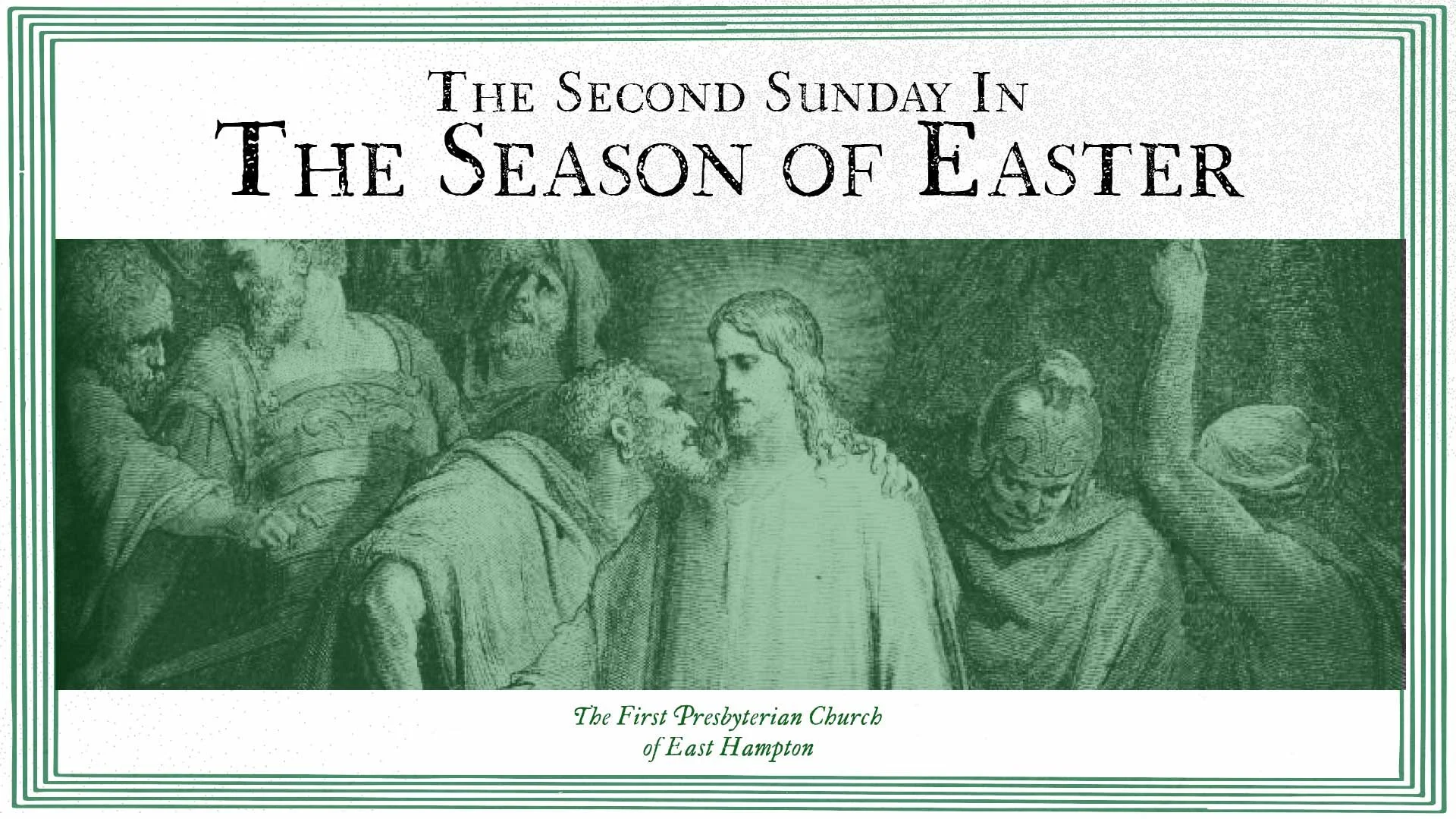
Before his journey to the Cross, Jesus is tried before the religious authorities and the civil authorities to the same effect. In both cases, he is found guilty without evidence. According to John, this is all the evidence we need to find the institutions, themselves, guilty. Instead, he offers a crucial reminder: Jesus did not come to serve the government or religious authorities - he came to replace them. The Church is not called to be an institution, but a faithful group of followers living as Christ lived.
Jesus comes to do what only he can do. He makes us clean, he forgives us, and he loves us just as we are. Pride tells us that God's grace is always for someone else. Jesus tells us - dirt and all - that we are loved and accepted.
The life we build is constructed through an endless series of small choices. Each choice reflects our core orientation to the world: do we choose fear or love? The Resurrection is about the victory of life over death. But it is not the victory of just any kind of life - it is about the victory of a life defined by love, not fear.

The Gospel narrative is not single-dimensional. With every perspective, the contours of its story change, broaden, and vary. John does not satisfy our longing for a simplistic tale of black and white morality, where every scene clearly communicates the significance of Jesus’ every action. Instead, John uses ambiguity to challenge our preconceived notions. He squarely asks us: do you really understand the Gospel? Or are you just following along?
There are many good reasons not to believe in God. They may be personal or public, individual or universal. John’s Gospel is just as attentive to belief as it is to disbelief. The resurrection of Lazarus is the ultimate and greatest miracle Jesus performs - and it has the effect of dividing its witnesses. As it turns out, it is the religious witnesses who deny the resurrection. Those who follow Jesus because of who he is, not what he does believe in the resurrection, even if they reject the religion of the Pharisees.
The Great Commandment is reflexive. Because God calls us to love him and serve our neighbor using every part of ourselves - heart, soul, body, mind - he also redeems every part of us. This means that God wants more from us than obedience or worship - God wants a relationship with us. We cannot experience this relationship and we cannot live out the Great Commandment unless we offer God our hearts - in addition to our minds.
Christian Freedom, at its best, should follow the sacrifice of Jesus. When the Church acts, it should act in free obedience to the God who is revealed in Christ’s sacrifice. This means we are called to put our neighbor’s interests before our own, sacrificing our time, talent, and spirit in service to them and to God.
Christians historically have fought to exclude their enemies from the life of the church - through wars, schisms, and trials. Their justification? To purify the church through its worship and practice. The results are not convincing. But what happens when Jesus is the one who draws the boundary - what happens when obedience to his means giving up some of our freedom?
What happens when Jesus asks you to break God’s law? Christian freedom means liberation from the oppressive laws of man - but what does it mean for God’s law? Jesus models how the way of the Gospel is not anarchy or lawlessness, rather it accomplishes what law cannot.
When Jesus finds us struggling under the burden of tradition and man's law, he reminds us that we are subject only to His law. This means that we remove any barrier to loving God and neighbor, no matter its source: nation, religion, gender, or ethnicity. Jesus makes clear that his way is above the way of the world, and the kingdom he inaugurates conquers the ways of man.
What does it mean to be born again? If the Kingdom of Heaven belongs to such as these, why doesn’t Jesus clearly explain how we can be born again? In the mystery of birth, we discover that God’s grace poured out must have more to do with his action than ours - his call which makes our response possible.
Christian freedom is nothing less than freedom from fear - fear of neighbor, self, and God. Jesus bravely models the fearlessness he calls disciples to imitate. In taking on the powers of exploitation and injustice, Jesus embodies the Christian mission: to love God and neighbor in the face of fear.
How does conversion work? Is it more like conquest or liberation? The Bible provides several examples of how Jesus calls us to discipleship, but the most common is through dialogue. We bring our questions, doubts, and authentic selves to Jesus and he meets us as we are.
John's Gospel is unique. It was born out of a crisis of faith and the need to articulate unambiguously the truth of Jesus' mission and identity. More than any other evangelist, John paints a picture of Jesus colored by Christian Freedom - freedom for and from. In Christ, we are freed for obedience and from sin.